
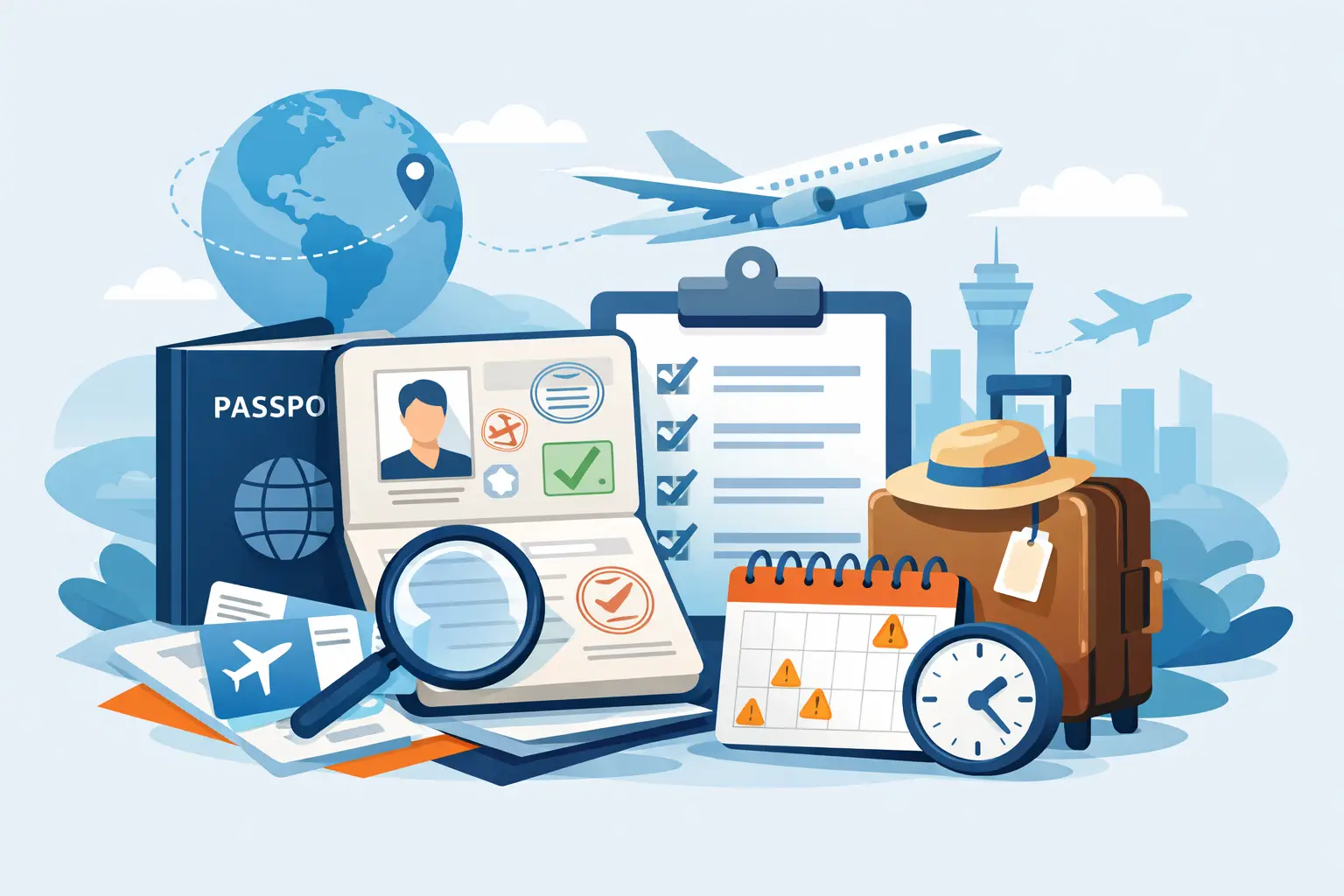
How to Avoid Visa Delays Before You Travel
A visa delay rarely starts at the embassy. It usually starts much earlier – with one missing document, one mismatch in dates, or one rushed application sent a little too late.
If you are wondering how to avoid visa delays, the good news is that most hold-ups are preventable. The process can feel stressful, especially when flights, hotel bookings and annual leave are already lined up, but the biggest problems tend to come from small errors rather than complicated rules. A careful approach from the beginning gives you a much better chance of a smooth approval.
How to avoid visa delays starts with timing
The most common mistake is applying too late. Many travellers assume a visa will be processed within the standard timeline shown online, then build their travel dates around the best-case scenario. That is risky. Processing times can change because of holiday periods, embassy closures, high application volume, extra checks or public holidays in either country.
A smarter approach is to work backwards from your planned departure date and leave breathing room. If a destination usually processes visas in a few working days, that does not mean every application will move at the same speed. Families, first-time travellers, applicants with limited travel history, or anyone submitting additional supporting papers may face a longer review.
This matters even more during peak travel seasons. School holidays, Eid travel, summer breaks and year-end trips often create a surge in applications. If you know your dates are fixed, start the visa process before you book anything that cannot be changed, or at least choose bookings with flexible terms where possible.
Get your documents right the first time
Most visa delays happen because the file is incomplete or inconsistent. That sounds obvious, but it is where many applications go wrong.
A document can be technically present and still cause delay. A passport copy might be unclear. A bank statement might be too old. A hotel booking might not match the travel dates listed on the form. Even a spelling variation between documents can trigger questions.
Before submission, check whether your passport has enough validity and blank pages for the destination. Make sure photographs meet the exact size and background requirements. Review every supporting document as a full set rather than one by one. The embassy is not looking at your papers in isolation – they are looking for a clear, believable travel story.
That means your flight reservation, hotel confirmation, leave letter, bank statement and itinerary should all support the same plan. If your paperwork suggests confusion, the application may be delayed for clarification or further review.
Why consistency matters more than people think
Visa officers are trained to spot gaps, mismatches and unusual patterns. They are not only checking whether you submitted enough documents. They are checking whether everything lines up.
Your job title should be the same across your employment letter and any other supporting papers. Your travel dates should match across the form, the booking documents and your cover letter if one is included. If you are travelling with family, details across linked applications should also be consistent.
This is especially important for self-employed applicants, sponsored travellers and people with recently changed jobs. These cases are not necessarily difficult, but they often need cleaner documentation. If your circumstances are slightly more complex, clarity becomes even more valuable than volume. Sending extra papers that do not add anything useful can create confusion rather than confidence.
How to avoid visa delays when booking flights and hotels
Travellers often rush into booking everything first and checking visa rules later. That can create pressure and poor decisions.
For some destinations, confirmed bookings are part of the application. For others, temporary reservations or a draft itinerary may be enough. The right choice depends on the country, the visa type and your travel profile. Booking expensive non-refundable services before checking the visa requirements is rarely the safest move.
What does help is making sure your bookings are realistic and aligned. If your planned trip is five days, but the hotel booking shows two nights in one city and no explanation for the remaining dates, that may invite questions. If your itinerary includes several cities in a short period, make sure the route makes practical sense.
For families, keep the travel plan simple where possible. Straightforward itineraries are easier to support with documents and easier for the visa team to assess. A clear holiday plan usually moves more smoothly than one that looks unfinished.
Financial proof needs to be clear, not dramatic
Many applicants think the answer is to show as much money as possible at the last minute. In reality, sudden large deposits without explanation can raise more questions than steady, understandable account activity.
Your financial documents should show that you can support the trip in a normal and credible way. Regular salary credits, healthy balances over time and statements issued within the accepted period are usually more useful than trying to make the account look impressive just before applying.
If someone else is paying for the trip, the sponsorship documents must be complete and easy to follow. That often includes proof of relationship, the sponsor’s financial documents and a letter clearly stating what costs are being covered. In sponsored applications, missing context is one of the biggest causes of delay.
Pay attention to destination-specific rules
There is no single formula that works for every country. Some embassies focus heavily on financials. Others care more about travel history, return intention or document format. Some require translations, specific forms, biometric appointments or insurance details. Others are more straightforward.
This is where travellers lose time by relying on old advice from friends or online comments. Visa rules change. What worked for someone six months ago may not apply to your nationality, your residence status or your travel purpose.
If you are applying from Abu Dhabi or elsewhere in the UAE, always check the latest destination requirements before preparing the file. Even a small update in photo specification, statement period or appointment process can affect timing.
Double-check the application form before submission
The visa form is where many delays begin because people rush through it. A form can look simple, but small errors matter.
A wrong passport number, an incorrect travel date, an old employer name or an incomplete address can lead to requests for correction. Sometimes that only causes a short delay. Sometimes it means a missed appointment or a full resubmission.
Read every section slowly. Make sure names match the passport exactly, including spacing and order where required. If a question does not apply to you, answer it correctly rather than guessing. If you are unsure about a section, get it clarified before submission instead of hoping it will be overlooked.
When expert support can save time
Not every visa application needs full-service support, but many travellers benefit from a professional review – especially when the trip dates are close, the itinerary includes multiple passengers, or the requirements feel unclear.
An experienced travel agency can often spot issues that applicants miss, such as mismatched bookings, missing supporting papers or timing problems around embassy appointments. That does not guarantee approval, and no honest agency should promise that. What it can do is reduce avoidable mistakes and make the process much more manageable.
For busy professionals and families, that support can be the difference between a stressful scramble and a confident submission. At Happy Journey, for example, visa handling is part of making the whole holiday process feel simpler, from documents to bookings to travel guidance.
Build a buffer for the unexpected
Even the strongest application can face delays outside your control. Embassies may ask for additional documents, biometric slots may be limited, or system issues may affect appointment availability. That is why the goal is not just to submit correctly. It is to submit early enough that an unexpected pause does not derail the whole trip.
If your travel is tied to a wedding, school break, honeymoon or religious journey, that buffer becomes even more important. Fixed dates leave less room to recover.
The best travellers treat the visa as the first major booking milestone, not the last errand before departure. When you give the process enough time and attention, everything after it becomes easier.
A smooth trip often begins long before the airport. If you want to know how to avoid visa delays, think less about rushing the system and more about presenting a clear, complete and timely application. That calm preparation is what keeps travel plans moving in the right direction.

Recent Posts

How to Apply for a Schengen Visa from UAE