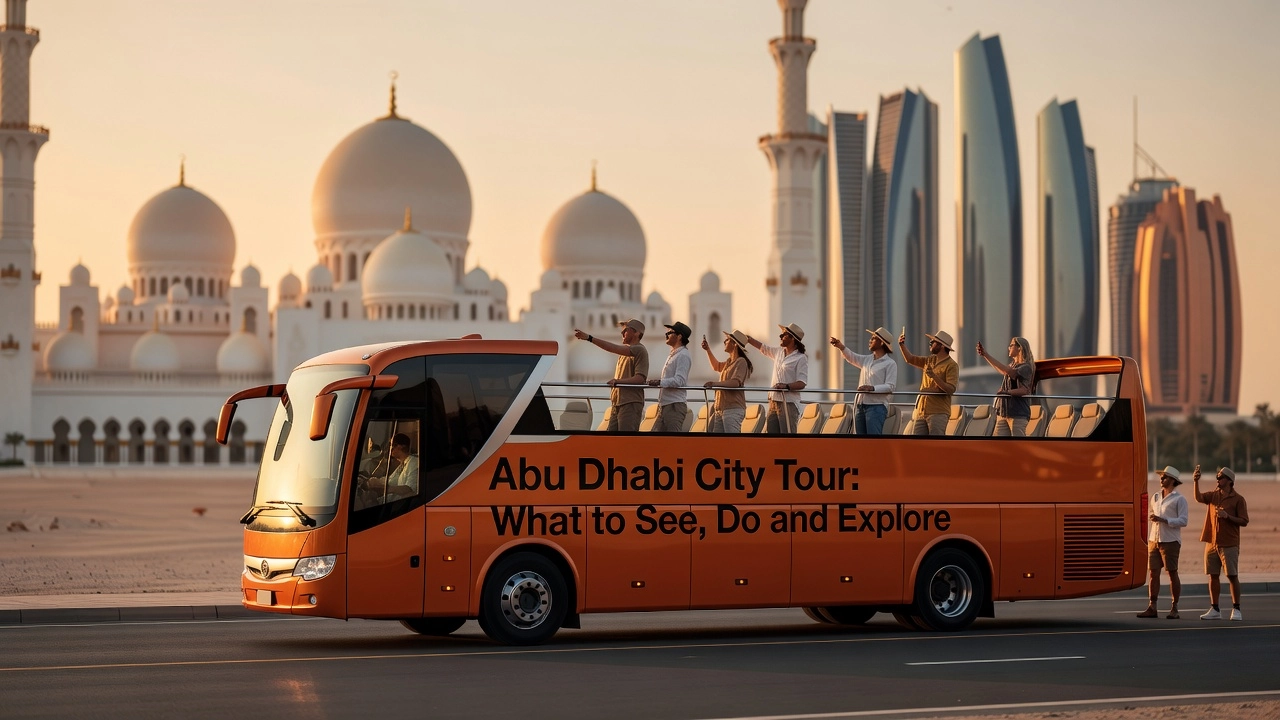
Abu Dhabi City Tour: What to See, Do and Explore
Abu Dhabi is one of the most breathtaking cities in the world, blending ultramodern architecture with deep-rooted cultural heritage in a way that few destinations can match. Whether you are planning your first visit or simply trying to make the most of limited time, an Abu Dhabi city tour is the smartest way to experience everything this remarkable capital has to offer.
From golden desert landscapes to glittering waterfront promenades, Abu Dhabi rewards curious travelers at every turn. But knowing where to start can feel overwhelming, especially if you have never visited the UAE before. That is exactly why we put this guide together.
In this listicle, you will discover the top attractions, hidden gems, and essential experiences that belong on every Abu Dhabi city tour itinerary. We will walk you through iconic landmarks, cultural hotspots, and practical tips to help you navigate the city with confidence. By the time you finish reading, you will have a clear, actionable plan for exploring one of the Middle East’s most extraordinary cities. Let’s get started.
Why Abu Dhabi Is a Destination in Its Own Right
Many first-time visitors arrive in the UAE expecting Abu Dhabi and Dubai to be interchangeable. They are not. Abu Dhabi is the UAE’s capital city, the seat of its federal government, and the cultural heart of the nation. Where Dubai leans into spectacle and speed, Abu Dhabi moves with a quieter confidence, prioritising heritage, civic identity, and a pace that makes genuine exploration feel rewarding rather than rushed.
The landmarks here are unlike anything Dubai offers. The Sheikh Zayed Grand Mosque stands as one of the world’s most breathtaking religious sites. Qasr Al Watan, a royal palace open to the public, offers a rare window into Emirati governance and artistry. The Saadiyat Cultural District is positioning Abu Dhabi as a serious global museum destination, with institutions that reflect the emirate’s deep investment in culture. Add a picturesque coastline, mangrove reserves, and golden desert on its doorstep, and the city’s diversity becomes immediately clear.
Abu Dhabi has been named a top luxury destination for US travellers in 2026, reflecting its rapidly rising global profile. Leisure travel continues to drive sustained tourism growth across the UAE market, with institutional interest in the region tracked well into the coming decade.
For first-time visitors, the city’s scale and variety can feel overwhelming without structure. A guided Abu Dhabi city tour removes that uncertainty entirely, ensuring every major landmark is covered efficiently. Beyond its sights, Abu Dhabi is consistently recognised as one of the safest cities in the world, making it a genuinely welcoming destination for solo travellers, families, and couples planning their first visit to the region.
What an Abu Dhabi City Tour Typically Covers
A standard Abu Dhabi city tour is built around five flagship landmarks, each representing a distinct facet of the emirate’s identity. The Sheikh Zayed Grand Mosque anchors every quality itinerary, and for good reason. Its architecture features 82 domes, over 1,000 columns, and the world’s largest hand-knotted carpet, covering more than 5,600 square metres. Guided commentary at this site explains the Islamic geometric patterns, the significance of the Swarovski crystal chandeliers, and the design philosophy that makes this one of the most visited religious buildings on the planet.
From the mosque, well-structured tours move to Qasr Al Watan, the Presidential Palace that opened to the public in 2019. This is not a ceremonial showpiece; it remains an active seat of governance where heads of state are received. Guides contextualise both its political importance and its architectural detail, giving visitors a rare window into the UAE’s leadership culture.
Louvre Abu Dhabi offers a different layer of depth. Its permanent collection spans civilisations and centuries, presenting art and artefacts under the premise that humanity shares more than it divides. Most tours include either an exterior photo stop beneath its iconic perforated dome or a full interior visit, depending on the itinerary tier.
The Corniche waterfront and Yas Island complete the geographic sweep of the city, from its elegant public promenade to its world-class entertainment infrastructure. Photo stops at the Ferrari World exterior and along the Corniche promenade are standard inclusions on quality Abu Dhabi afternoon city tours.
Routing matters as much as the stops themselves. A well-planned tour follows a logical geographic sequence that minimises transit time and maximises time spent at each site. Happy Journey UAE structures its Abu Dhabi city tours with deliberate pacing at every landmark, ensuring visitors are not rushed from one stop to the next. The experience is curated rather than compressed, giving first-time visitors the breathing room to absorb each location fully rather than simply photograph and depart.
Sheikh Zayed Grand Mosque: The Unmissable Starting Point
No single landmark in the Middle East commands the same immediate impact as the Sheikh Zayed Grand Mosque. Built to honour the UAE’s founding father, Sheikh Zayed bin Sultan Al Nahyan, this architectural masterpiece opened in 2007 and has since attracted nearly 7 million visitors annually, with over 4.3 million guests recorded in the first half of 2025 alone. Those numbers confirm what every seasoned traveller already knows: this is where any serious Abu Dhabi city tour must begin.
The scale is genuinely staggering. The mosque accommodates over 40,000 worshippers across its vast prayer halls and courtyards, supported by 82 domes and more than 1,000 columns clad entirely in white Carrara marble. Four minarets rise to 106 metres each, framing a structure that blends Mamluk, Ottoman, and Indo-Islamic architectural traditions into one cohesive and breathtaking whole.
Inside, two features deserve your full attention. The main prayer hall contains the world’s largest hand-knotted carpet, created by 1,300 artisans and covering virtually the entire floor space. Above it hang magnificent Swarovski crystal chandeliers among the largest of their kind anywhere in the world, encrusted with gold plating and natural stones. Budget at least 45 minutes inside to appreciate both properly.
Practical preparation matters here. Women are required to wear an abaya and headscarf; abayas are available to borrow at the entrance free of charge. Men must wear long trousers and avoid sleeveless tops. Arriving on a guided tour with full visitor preparation means you are briefed well in advance, avoiding any delays at the gate.
The mosque is fully open to non-Muslim visitors at no entry cost, welcoming all nationalities, family groups, and solo travellers. It was ranked number one in the Middle East and eighth globally in the 2025 TripAdvisor report, making it one of the most photographed cultural sites on earth. For the best experience, arrive at opening time or return in the late afternoon when crowds thin and the lower sun casts warm golden light across the white marble, creating ideal photography conditions without harsh midday glare. Check the official E-Visitor Guide before your visit, as hours shift during Ramadan and on Fridays.
The Corniche, Louvre Abu Dhabi, and Qasr Al Watan
After beginning your tour at the Grand Mosque, the natural next move is to follow the waterfront west, where three of Abu Dhabi’s most visually and culturally distinct landmarks sit within easy reach of one another.
The Abu Dhabi Corniche
The Corniche is an 8-kilometre promenade stretching along the Arabian Gulf shoreline, and it functions as the spine of Abu Dhabi’s modern urban identity. First-time visitors are often struck by how deliberately the city has been designed around this waterfront; manicured gardens, cycling paths, and unobstructed sea views run alongside a skyline that reflects decades of purposeful development. A slow drive or a short walk along the Corniche places landmarks like Emirates Palace, Etihad Towers, and Qasr Al Watan within the same visual frame, making it both a geographic connector and a genuine photo opportunity. Arriving in the morning, when light falls cleanly across the Gulf, produces the strongest images.
Louvre Abu Dhabi
Louvre Abu Dhabi sits on Saadiyat Island, a short drive from the Corniche, and it stands apart from any other museum in the Arab world. Designed by French architect Jean Nouvel and opened in 2017, the building is itself a work of art; its perforated dome creates what Nouvel described as a “rain of light,” casting shifting geometric patterns across the galleries below. The museum’s permanent collection spans 5,000 years of human history across civilisations, placing ancient artefacts from Arabia, Asia, Europe, and the Americas in deliberate conversation with one another. It holds the distinction of being the first universal museum in the Arab world, a title that carries real meaning. Louvre Abu Dhabi exists as a cultural diplomacy project; it was born from a 30-year intergovernmental agreement between France and Abu Dhabi, designed to position the emirate as a global centre of culture and exchange rather than simply a commercial hub. Understanding that context transforms the visit. A knowledgeable guide can explain not just what you are looking at, but why this institution was built here, and what it signals about Abu Dhabi’s long-term ambitions. You can book a combined city tour that includes Louvre Abu Dhabi entry to make the most of limited time.
Qasr Al Watan
Qasr Al Watan, which translates as “Palace of the Nation,” is the UAE’s Presidential Palace, positioned at the tip of the Corniche at Al Ras Al Akhdar. Completed in 2017 and opened to the public by presidential decree on 11 March 2019, it remains a functioning seat of statecraft, hosting Gulf Cooperation Council summits, Arab League gatherings, and state banquets throughout the year. The Great Hall, with its soaring dome and hand-crafted ceiling detail, is considered one of the most architecturally intricate interiors in the entire region. Other visitor zones include the House of Knowledge, which showcases rare manuscripts and artefacts, the Qasr Al Watan Library, and the Spirit of Collaboration chamber used for formal diplomatic sessions. A guide who can explain what actually happens in these rooms, which world leaders have sat at these tables and why, elevates the experience from architectural appreciation to genuine historical understanding. Entrance tickets start from $18 on GetYourGuide, with the evening Palace in Motion light show offering a compelling reason to stay after dark.
Sequencing These Three Sites Efficiently
Because all three sites cluster along or immediately adjacent to Abu Dhabi’s western waterfront, visiting them in sequence on a single full day is entirely practical. A sensible order runs as follows: a Corniche drive in the morning to orient yourself to the city’s layout, Qasr Al Watan mid-morning when crowds are thinner, Louvre Abu Dhabi through the afternoon to allow adequate time in the galleries, and the Palace in Motion evening show to close the day. Dress modestly at both the palace and the museum; covered shoulders and knees are expected at Qasr Al Watan in particular. When these three sites follow the Grand Mosque earlier in the day, you have covered the full arc of Abu Dhabi’s identity, its spiritual foundation, its governance, its cultural ambition, and its urbanism, in a single coherent itinerary.
Yas Island and the Modern Side of Abu Dhabi
No Abu Dhabi city tour is complete without acknowledging the emirate’s other identity: a world-class modern entertainment destination. Yas Island, located approximately 30 minutes from the city centre, delivers that experience in concentrated form. The island is home to Ferrari World Abu Dhabi, the world’s first Ferrari-branded theme park, which holds a 4.1 out of 5 rating across more than 18,500 TripAdvisor reviews and ranks among the top attractions in the entire emirate. Alongside Ferrari World, the island clusters Yas Waterworld, Warner Bros. World, and SeaWorld into one of the most densely packed entertainment zones in the Middle East.
The contrast Yas Island creates within a single day’s itinerary is genuinely striking. Moving from the Sheikh Zayed Grand Mosque or Qasr Al Watan to the futuristic skyline of Yas Island illustrates exactly why Abu Dhabi defies simple categorisation. It is simultaneously a city of deep heritage and a bold modern capital investing heavily in leisure tourism.
The Yas Marina Circuit, host of the Formula 1 Etihad Airways Abu Dhabi Grand Prix, is worth visiting even outside race season. The waterfront setting is visually impressive, and the circuit also hosts karting, drag racing, and other motorsport events throughout the year, giving visitors an active experience beyond sightseeing.
Families with children will gain the most from an itinerary routed through Yas Island, while travellers focused on culture may prefer additional time at heritage sites instead. Happy Journey UAE builds flexible city tour routes around exactly these preferences, ensuring your afternoon on Yas Island feels purposeful rather than rushed.
Half-Day vs. Full-Day Tours and Private vs. Group Options
Choosing the right tour format is just as important as choosing which landmarks to visit. Understanding your options before you book ensures you get the experience that fits your schedule, travel style, and budget.
Half-Day Tours (4 to 5 Hours)
A half-day Abu Dhabi city tour is designed for efficiency. In approximately four to five hours, you will visit the Sheikh Zayed Grand Mosque, take a scenic drive along the Corniche, and cover one or two additional landmarks such as Qasr Al Watan or a photo stop at Louvre Abu Dhabi. This format is ideal for travellers combining Abu Dhabi with a Dubai itinerary on the same day, or for cruise passengers with limited port time. It delivers the essential highlights without requiring a full day away from other commitments.
Full-Day Tours (7 to 9 Hours)
A full-day tour unlocks a considerably richer experience. With seven to nine hours at your disposal, your itinerary can include the Grand Mosque, the Corniche, Louvre Abu Dhabi, Qasr Al Watan, and a visit to Yas Island, with dedicated time for lunch and unhurried photography at each stop. This format suits first-time visitors who want a thorough introduction to the emirate without returning for a second day.
Private vs. Group Tours
Private tours offer a dedicated vehicle, a personal guide, and the flexibility to linger at sites that matter most to you. Families, couples, and small groups benefit most from this format, as pacing and route adjustments are entirely in your hands. Private Abu Dhabi city tour packages typically include transport, a licensed guide, and entrance fees bundled into a single arrangement.
Group tours are the cost-effective alternative. They follow a fixed itinerary and schedule, but still provide expert guided commentary throughout. Solo travellers and those who enjoy meeting fellow visitors often find this format equally rewarding.
Full-service bundled arrangements, covering transport, guide, and entrance fees, hold a 60% share of the global travel agency services market in 2026, reflecting a clear and growing traveller preference for hassle-free packages over self-arranged components. Booking a complete package through a trusted agency such as Happy Journey removes the logistical burden entirely, letting you focus on the experience itself.
Best Time to Take an Abu Dhabi City Tour
Timing your Abu Dhabi city tour correctly makes a significant difference to how much you enjoy the experience. The emirate’s climate is the single biggest variable to plan around, and understanding it before you book will help you get the most from every landmark on your itinerary.
October through April is the optimal window for outdoor sightseeing in Abu Dhabi. During this period, daytime temperatures range from 18°C to 28°C, making it entirely comfortable to walk the Corniche promenade, spend time at the exterior of the Sheikh Zayed Grand Mosque, and explore open-air areas without heat fatigue. Winter months, particularly December through February, consistently record the most pleasant conditions for first-time visitors.
November and February are peak months for international arrivals, which means tour slots, guides, and preferred departure times fill up faster than at other points in the year. Booking at least one to two weeks in advance during these months is strongly recommended. If your visit coincides with the Abu Dhabi Grand Prix in November, extend that lead time to six to eight weeks, as city-wide demand spikes significantly across accommodation and tour products alike.
Summer months from June through September bring daytime temperatures that regularly exceed 40°C. Tours remain possible during this period but should be structured around indoor venues. The Louvre Abu Dhabi and Qasr Al Watan are ideal centrepieces for a summer itinerary, as both are fully air-conditioned and architecturally impressive regardless of season. Schedule any outdoor activity exclusively in the early morning or after sunset.
Early morning departures, starting between 8:00 and 9:00 AM, are advisable year-round. Cooler temperatures and smaller crowds at the Sheikh Zayed Grand Mosque make this window particularly valuable. Note that on Fridays, the mosque operates on adjusted hours, opening from 9:00 AM to 12:00 PM and reopening at 3:00 PM, so morning tour schedules should account for this.
Ramadan introduces a distinct cultural dimension to any Abu Dhabi city tour. Landmarks including the mosque remain open throughout the holy month, but eating, drinking, and smoking in public during daylight hours is restricted for all visitors. Scheduling your tour to conclude around Iftar, the evening meal that breaks the fast, is a genuinely rewarding approach. The Sheikh Zayed Grand Mosque hosts a Grand Iftar open to all nationalities, with free entry and no registration required, offering a cultural experience unavailable at any other time of year.
Why Travellers Choose Happy Journey UAE for Their Abu Dhabi City Tour
Selecting the right tour operator shapes everything about your experience in Abu Dhabi, from the quality of your guide to how smoothly pick-up and drop-off are handled. Happy Journey UAE brings together deep local knowledge, professional staff, and a proven track record of organising reliable city tours that run on schedule and deliver on every detail.
1. Established Local Expertise Happy Journey UAE is an Abu Dhabi-based agency staffed by professionals who know the city intimately. That local grounding means itineraries are structured around the landmarks that matter most, with route planning that accounts for real traffic patterns, prayer times, and seasonal conditions. Guides are consistently praised by name in customer reviews, reflecting a level of personal accountability that distinguishes the agency from impersonal booking platforms.
2. Transparent, Value-Driven Pricing As UAE package holiday ARPU is projected to reach USD 3,618.68 by 2030, travellers are clearly investing more in quality experiences. Happy Journey’s bundled tour packages are priced with full transparency; there are no hidden fees added after booking. This approach aligns directly with the growing preference for premium, all-inclusive travel arrangements.
3. Simple Online Booking With 65% of all travel arrangements now made online, Happy Journey’s mobile-friendly website supports quick, confirmed bookings without unnecessary steps.
4. Flexible Tour Formats Private and group tours are both available, catering to solo travellers, couples, families, and corporate groups with flexible departure options.
5. Consistently Strong Reviews Happy Journey holds a 4.6 Google rating across 226 reviews. Reviewers regularly highlight comfortable vehicles, professional guides, and seamless coordination from start to finish.
Practical Tips Before You Book Your Abu Dhabi City Tour
A few key practicalities can make the difference between a seamless Abu Dhabi city tour and an avoidable frustration. Review these points before you confirm any booking.
1. Clarify what entrance fees are included Not all tour packages are priced equally, and the difference often comes down to paid attractions. Louvre Abu Dhabi and Qasr Al Watan both charge admission, and some operators bundle these fees while others list them as extras. When comparing packages, always ask specifically which entrance fees are absorbed into the tour price and which you will pay on arrival. A lower headline price that excludes major attraction entry can end up costing more overall.
2. Dress modestly across all cultural sites The dress code at Sheikh Zayed Grand Mosque is strictly enforced; shoulders, arms, and legs must be fully covered, and women are required to wear a headscarf. Beyond the mosque, modest and respectful clothing is expected at Emirates Palace, Qasr Al Watan, and the Louvre. Lightweight, breathable fabrics such as cotton or linen work well and keep you comfortable throughout the day.
3. Pack smart for a full-day itinerary Bring sunscreen, a refillable water bottle, and a portable phone charger. Abu Dhabi’s sun is intense even during the cooler winter months, when daytime temperatures average around 24°C. Full-day tours involve considerable walking and photography opportunities, and running out of battery or water mid-tour is easily avoided with minimal preparation.
4. Check schedules around the Friday weekend Abu Dhabi observes a Friday and Saturday weekend. Sheikh Zayed Grand Mosque is closed to tourists on Fridays, and other sites may operate on reduced hours. Confirm your tour’s itinerary and specific opening times with your operator before booking, particularly if you are planning a Friday departure.
5. Account for travel time from Dubai The drive from Dubai to Abu Dhabi takes approximately 90 to 120 minutes each way depending on traffic. Booking a guided tour with hotel pick-up removes the added stress of navigation, toll payments, and parking at sites spread across the city.
Ready to Explore Abu Dhabi? Here Is How to Get Started
An Abu Dhabi city tour remains the single most efficient way to experience the UAE capital, bringing together its cultural landmarks, architectural masterpieces, and modern attractions within one well-organised day. From the Sheikh Zayed Grand Mosque to the Corniche and beyond, the city rewards visitors who plan thoughtfully and book with a trusted local operator.
Happy Journey UAE is the recommended choice for first-time and returning visitors alike. As a top-rated, locally based travel agency in Abu Dhabi, Happy Journey UAE offers both private and group tour formats, giving every traveller a format that suits their schedule, group size, and budget.
To secure your preferred date and itinerary, visit happyjourneyuae.com and book online. Availability tightens considerably during the peak October to April season, so early booking is strongly advised.
For custom itineraries, group reservations, or questions about inclusions and pricing, contact Happy Journey UAE directly. Their local expertise ensures your tour is personalised, seamless, and genuinely memorable.
Conclusion
Abu Dhabi is more than just a stopover; it is a destination that rewards every traveler who takes the time to explore it properly. From the awe-inspiring Sheikh Zayed Grand Mosque to the vibrant Corniche and the rich cultural offerings scattered throughout the city, there is genuinely something here for everyone.
To make the most of your visit, prioritize the iconic landmarks, embrace the local culture, and leave room in your itinerary for unexpected discoveries. Planning ahead and choosing a guided city tour can save you time and ensure you miss nothing important.
Now it is your turn to bring this adventure to life. Start mapping out your Abu Dhabi city tour today, bookmark the highlights that excite you most, and get ready to experience one of the most captivating cities on the planet.
Recent Posts