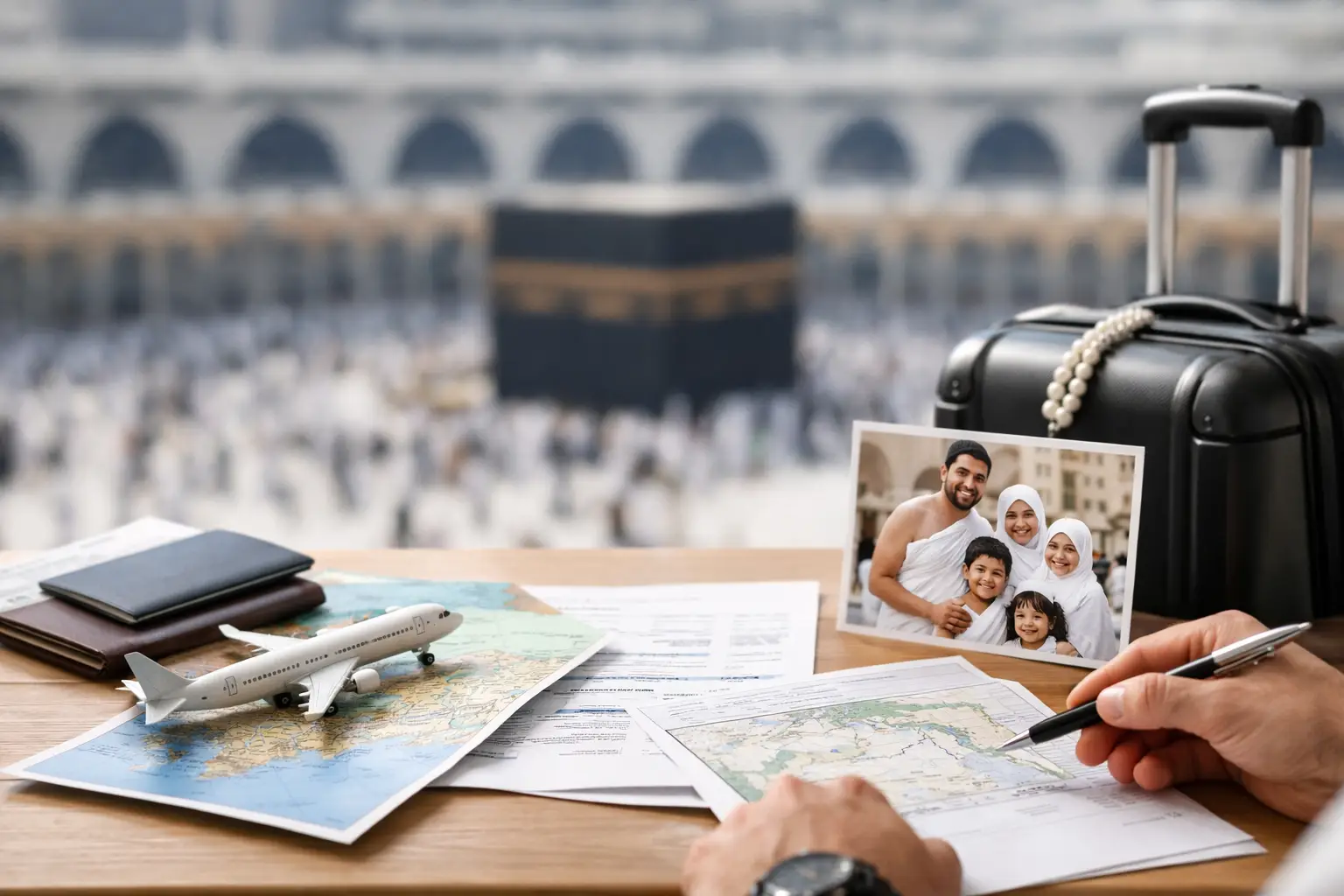
Umrah Travel Planning Case Study for Families
A family Umrah journey is rarely difficult because of one big decision. It becomes stressful when several small decisions – visa timing, flight hours, hotel distance, room arrangements and airport transfers – are left until the last minute. This umrah travel planning case study follows how one Abu Dhabi family turned a busy, multi-person trip into a calm and meaningful pilgrimage.
The family’s names and some personal details have been changed, but the planning challenges are familiar to many UAE residents: different ages, limited annual leave, a fixed budget and a desire to focus on worship rather than logistics.
The family’s priorities before booking
The Al Noor family consisted of two parents, their two adult daughters and the grandmother, who was travelling for Umrah for the first time. Their preferred travel window was a school break, which meant higher demand for flights and hotels. They wanted to spend time in both Makkah and Madinah, stay within comfortable walking distance where possible, and avoid overly tight transfer schedules.
Their first request was simple: “Please arrange everything so Mum does not have to worry.” Behind that request were several practical needs. The grandmother needed minimal walking, the daughters wanted clear room-sharing arrangements, and the parents needed a package price that did not keep changing as bookings were made.
This is where tailored planning matters. A lower headline price may look attractive, but it can lose its value if it involves inconvenient flight connections, a hotel far from the Haram, or transfers that do not suit elderly travellers. The right Umrah package depends on who is travelling and what will make the journey manageable for them.
Umrah travel planning case study: building the itinerary
The first stage was to confirm the family’s travel dates, passport validity and documentation status. Rather than booking flights immediately, the itinerary was built around the period available to the family and the likely processing time for the required travel documents. Saudi travel rules and visa requirements can change, so these details must always be checked for the individual traveller before confirmation.
Once the documentation route was clear, flight options were compared. The cheapest fare was not selected automatically. One option had a long overnight connection that would have left the grandmother exhausted before arriving in Jeddah. Another had more suitable timings and a shorter overall journey, even though it cost slightly more. The family chose the second option because it reduced fatigue and gave them a more comfortable start.
Choosing the right order: Makkah first or Madinah first?
The family initially assumed they should visit Makkah first. However, their available flights made Madinah the more practical arrival point. Starting in Madinah gave everyone time to rest, settle into the hotel and visit Al-Masjid an-Nabawi before travelling onward to Makkah for Umrah.
There is no single best order for every group. Arriving in Madinah first can be gentler for elderly travellers, especially after a long flight. Going directly to Makkah may be preferred by pilgrims with limited time or better Jeddah flight options. A travel adviser should explain both routes clearly rather than force every family into the same itinerary.
The final plan allowed four nights in Madinah and five nights in Makkah. This was not designed as a rushed sightseeing schedule. It gave the family space for prayers, rest, meals and personal worship, while still allowing arranged ziyarat visits at a comfortable pace.
Hotel selection beyond star ratings
Hotels were assessed for more than their category. The key questions were whether the route to the Haram was straightforward, whether lifts could become busy at peak prayer times, whether the rooms suited five travellers, and whether breakfast timing would work for the family.
In Madinah, the selected hotel offered a convenient location and family room configuration. In Makkah, the priority shifted to reducing walking distance and avoiding a steep or confusing route, which could be challenging after prayers. The family accepted a slightly higher hotel rate in Makkah in return for greater comfort for the grandmother.
That trade-off was one of the most valuable decisions of the trip. Saving money on a distant hotel can make sense for fit travellers who are happy to walk or use local transport. For a family travelling with an older relative, proximity often has a direct effect on energy, comfort and peace of mind.
Coordinating the details that travellers often miss
With flights and hotels provisionally selected, the plan moved from a booking outline to a working journey. Transfers were arranged from airport to hotel, between Madinah and Makkah, and for the return airport journey. The family received a clear schedule showing what was included, the expected travel times and where they would meet their driver.
The overland transfer between Madinah and Makkah was particularly important. It was booked with enough time for comfort breaks and meals, rather than treating the journey as a simple point-to-point ride. Travelling as a family requires realistic timings. A schedule that looks efficient on paper may not be enjoyable when luggage, elderly passengers and prayer times are involved.
The family was also guided on practical preparation: keeping passports and booking documents together, carrying essential medicines in hand luggage, packing comfortable footwear, and allowing for busy periods around the Haram. They were encouraged to confirm luggage allowances before departure and to keep a small amount of accessible spending money for personal purchases and meals not included in the package.
These are not glamorous parts of pilgrimage planning, but they prevent avoidable pressure. Clear information before departure gives travellers confidence without overwhelming them with unnecessary detail.
What changed during the journey
No travel plan should pretend that every moment will be perfectly predictable. On arrival, one piece of checked luggage was delayed. Because the family had transfer details, hotel confirmation and support contact information readily available, they could proceed to the hotel without confusion while the airline process was followed up.
The family also adjusted one planned ziyarat visit in Makkah. After a busy evening at the Haram, the grandmother needed more rest the following morning. The visit was moved rather than forcing the group to follow the original schedule. This flexibility protected the purpose of the trip: worship with dignity and ease, not ticking off every activity.
This is a useful lesson for families booking Umrah. A complete plan should provide structure, but it should never become a burden. Build in breathing room, particularly when travelling with children, older parents or first-time pilgrims.
The outcome: less uncertainty, more presence
By the time the Al Noor family returned to the UAE, their strongest feedback was not about a particular flight or hotel. They valued that they knew what was happening at each stage and had someone to contact when a question arose. The grandmother was able to complete the journey at a pace that suited her, while the rest of the family felt free to concentrate on their ibadah.
The total cost was not the lowest option initially considered. Yet the family felt it represented better value because it included suitable travel timings, carefully chosen accommodation, coordinated transfers and support throughout the process. For religious travel, value is not only measured in dirhams. It is also measured in reduced stress, saved time and the ability to be fully present.
Planning lessons for UAE Umrah travellers
The case shows why early planning is especially helpful when school holidays, elderly relatives or several rooms are involved. It gives more choice in flights and hotels, and it allows enough time to address documentation properly. Waiting for a last-minute bargain can work for a flexible solo traveller, but it brings greater risk for a family with fixed dates.
It also shows why transparency matters. Ask what is included in the quoted price, how transfers are arranged, what room type is being offered and what support is available if plans change. A good travel plan does not hide the trade-offs. It helps you decide whether a more central hotel, better flight time or private transfer is worth the extra cost for your group.
For travellers in Abu Dhabi who prefer personal guidance, Happy Journey can help bring those moving parts together – from travel documentation and flights to hotels, transfers and itinerary advice. The aim is not to make Umrah feel like an ordinary holiday package. It is to make the practical side calm enough for the spiritual purpose of the journey to remain at the centre.
Before choosing your dates, gather your family for one honest conversation about mobility, budget, room preferences and how much time each person needs to rest. That small step can shape an Umrah journey everyone remembers for the right reasons.
Recent Posts